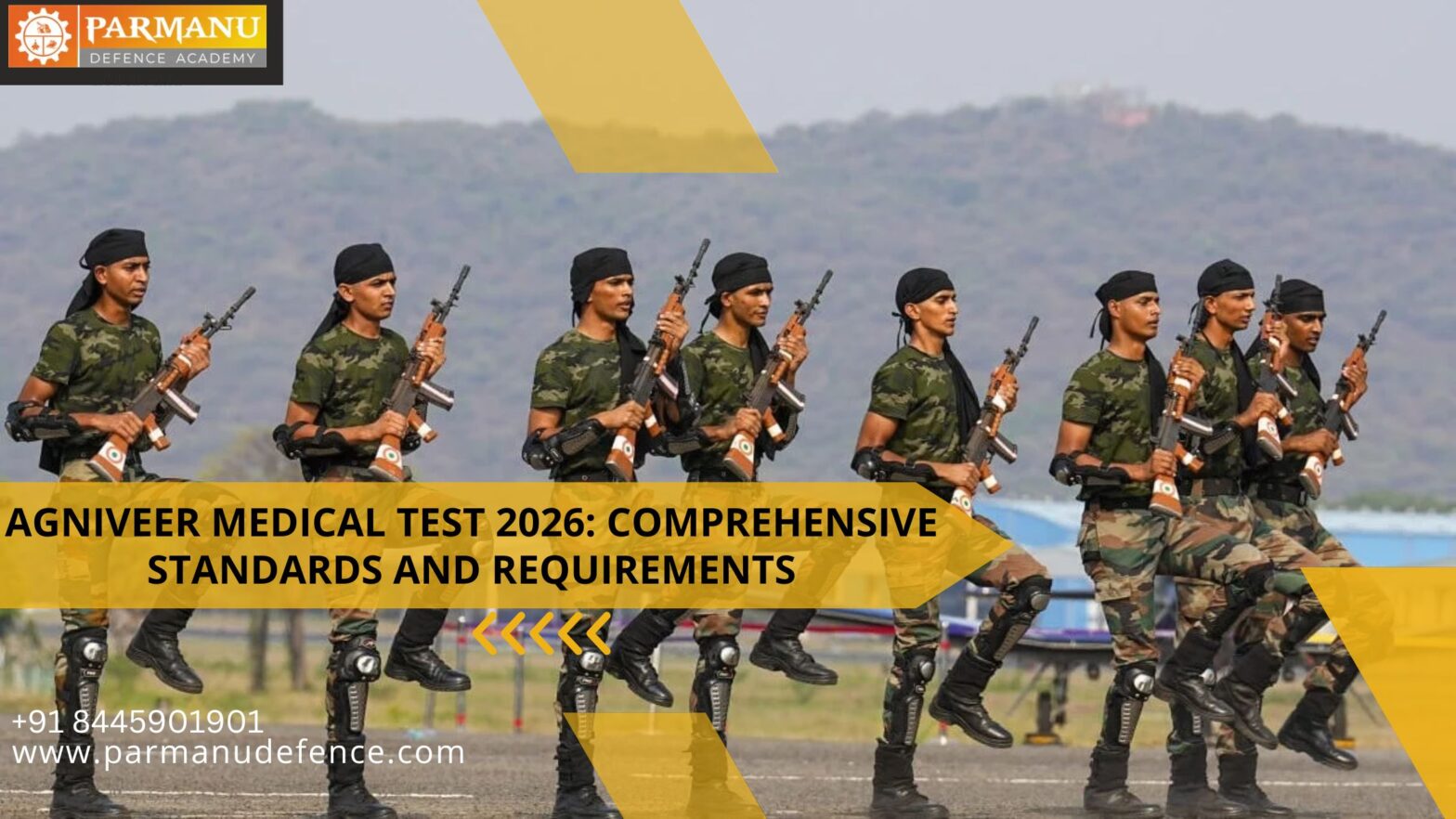
The Agniveer program lets Indian youth fulfil their dream of serving in the Army, Navy, and Air Force. The Agniveer Medical Test 2026 represents the most difficult stage of evaluation, which is conducted after a written exam and a Physical Fitness Test assessment. The most athletic candidates face potential rejection when they have health issues that remain undetected by health examiners.
The complete Agniveer Medical Test guide provides all necessary information about visual requirements and hidden reasons for rejection, which will enable you to prepare completely for your final examination.
The medical examination determines whether every recruit possesses sufficient physical strength to serve in high-altitude and combat situations without any health impairments.
Candidates must maintain both mental and physical health. The medical board uses medical assessments to determine:
Vision is the most common reason for rejection. The standards differ slightly by trade:
The board checks structural defects that might disturb marching and running movements:
Understanding the difference between Temporary Rejection (TR) and Permanent Rejection (PR) is vital.
| Condition | Type of Rejection | Solution/Tip |
| Color Blindness | Permanent | Genetic; cannot be cured. |
| Knock Knees / Flat Foot | Temporary/Permanent | Can be improved with specific exercises if mild. |
| Overweight / Underweight | Temporary | Maintain BMI according to the official Height-Weight chart. |
| DNS / Ear Wax | Temporary | Minor surgery or cleaning can resolve these. |
| Sweaty Palms | Permanent/Temporary | Often due to anxiety, practice staying calm. |
| Tattoos | Permanent | Only allowed on the inner forearm or back of the palm. |
Pre-Medical Checkup: Visit a civilian doctor for a full body check (Blood, Urine, ECG, X-Ray) 2 months before the rally.
Hygiene: You must get your ears cleaned by a professional, and you must remove all tartar and calculus from your teeth.
BMI Management: A strict diet should be followed to maintain weight according to height requirements. The maximum weight difference allowed between two height measurements is 10 per cent.
Avoid Injuries: Physical training requires you to exercise extreme caution because it protects you from sustaining fractures or ligament tears, which result in permanent bodily damage.
Q1. Is LASIK surgery allowed for Army Agniveer?
LASIK surgery is not allowed for General Duty. For technical entries, it may be allowed if the individual is above 20 years of age and the surgery was done at least 6 months ago.
Q2. How many dental points are required to pass?
A minimum of 14 dental points is mandatory. These points are awarded based on the presence of particular teeth.
Q3. Can I have a tattoo on my chest or neck?
No. Permanent tattoos are allowed on the inner forearm and the back of the hands. However, tattoos on the face, neck, chest, etc., will result in immediate rejection.
Q4. What happens if I am declared “Temporary Unfit”?
You will be referred to a Specialist at a Military Hospital. You are given 21 to 42 days to sort out the problem (lose weight, cure skin infection, etc.) and turn up again for a review.
Q5. Is Colour Blindness a permanent rejection?
Yes. Normal colour perception is required for distinguishing colours. No concession is allowed for colour blindness.
Parmanu Defence © Copyright 2025.All Rights Reserved