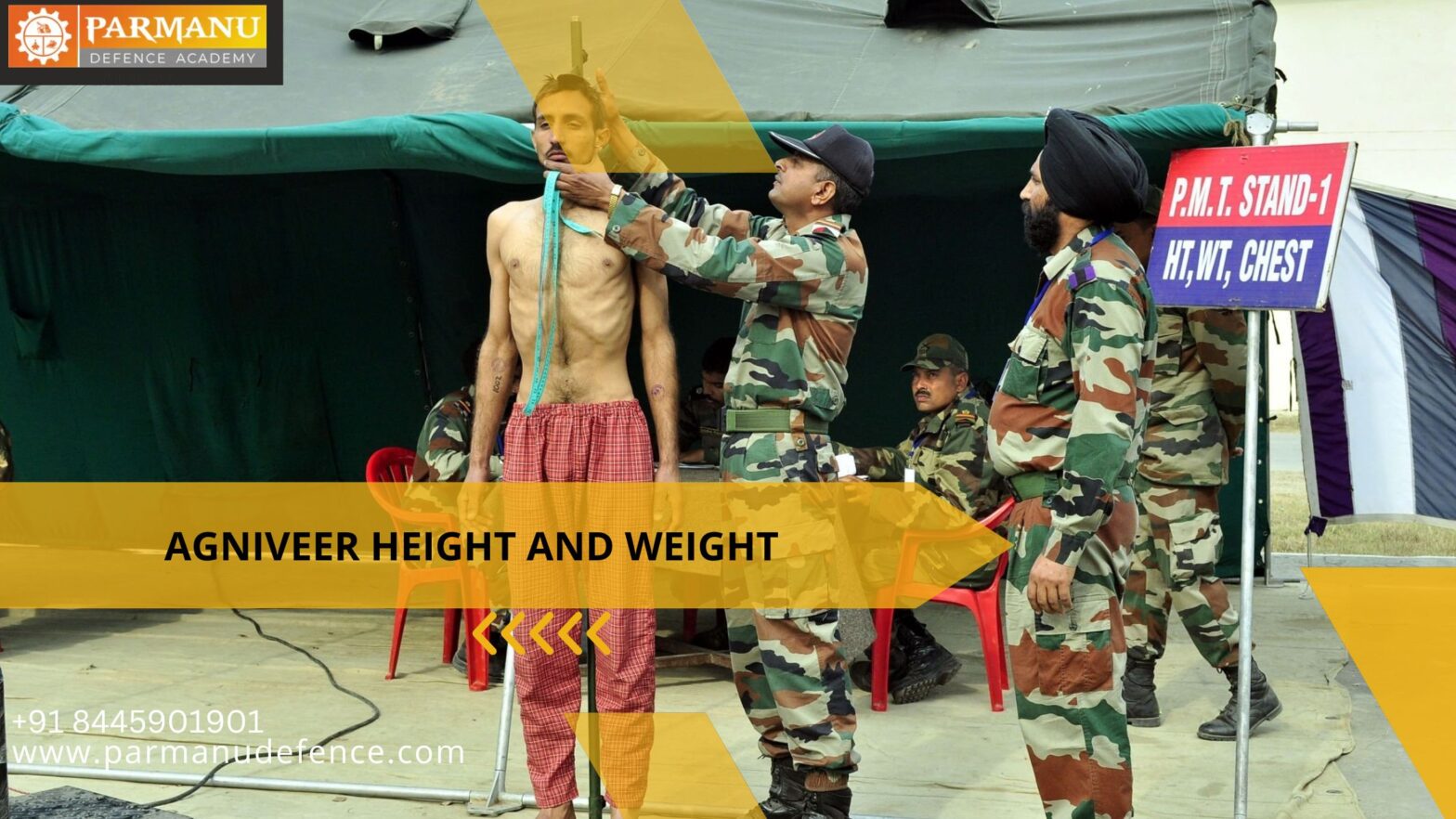
The Agniveer Height and Weight standards serve as the main assessment method during the Physical Measurement Test (PMT) process for the Indian Armed Forces. The military establishes mandatory physical standards that applicants must meet because they cannot modify these requirements. The Army, Navy, and Air Force recruitment boards established strict criteria that apply to specific regions and specific trades to test whether recruits can endure challenges across various terrains from the Siachen Glacier to the Thar Desert.
The guide offers detailed information about Agniveer Height and Weight 2026 standards, which include regional relaxations and the essential Height-to-Weight Proportion Chart, which medical officers use.
The Indian Army operates its recruitment process through a system that focuses on specific geographic areas. The height requirement for candidates is determined by their home state because different physical characteristics exist among people throughout the Indian subcontinent.
| Recruitment Region | States Covered | Height (GD/Technical) | Height (Clerk/SKT) |
| Western Himalayan | J&K, Himachal, Punjab Hills, Uttarakhand | 163 cm | 162 cm |
| Eastern Himalayan | Sikkim, NE States, Hill West Bengal | 160 cm | 160 cm |
| Western Plains | Punjab, Haryana, Delhi, Rajasthan | 170 cm | 162 cm |
| Eastern Plains | Eastern UP, Bihar, WB, Jharkhand, Odisha | 169 cm | 162 cm |
| Central Region | MP, Chhattisgarh, Gujarat, Maharashtra | 168 cm | 162 cm |
| Southern Region | AP, Karnataka, Tamil Nadu, Kerala, Goa | 166 cm | 162 cm |
The criterion for Agniveer Clerk or Store Keeper Technical is minimally different from the height criterion; however, in the General Duty (GD) part, almost all regions would prescribe a minimum height of 162 cm.
The Indian Navy and Indian Air Force enforce height requirements through a central command system, which needs exceptions for particular groups
The military weight requirement system establishes weight limits that depend on both height and age of military personnel. The medical board uses a Body Mass Index (BMI) based chart. The ideal weight range for most entries falls between a BMI of 18.5 and 25. The ideal weight range for most entries falls between a BMI of 18.5 and 25.
Note: A ±10% variation from these figures is typically the maximum allowance.
| Height (cm) | Min Weight (kg) | Max Weight (Age 17-20) | Max Weight (Age 20+) |
| 155 | 43.2 | 52.9 | 55.3 |
| 160 | 46.1 | 56.3 | 58.9 |
| 165 | 49 | 59.9 | 62.6 |
| 170 | 52 | 63.6 | 66.5 |
| 175 | 55.1 | 67.4 | 70.4 |
| 180 | 58.3 | 71.3 | 74.5 |
The weight requirements for female Agniveers who serve in the Corps of Military Police and the Navy and Air Force range from 42 to 45 kilograms based on their height. A person who stands 162 cm tall needs to weigh between 47 kg and 58 kg.
The Agnipath scheme provides specific height, weight, and chest relaxations for candidates with special certificates:
Height determines your final measurement because genetic factors create the most significant influence, yet you must maintain proper posture to avoid losing height.
People should avoid water loading before the Agniveer Height and Weight measurement because medical officers can detect this practice, and it will negatively impact their results during the 1.6-kilometre run.
Q1. What is the lowest weight required for Army Agniveer GD?
The lowest weight required in most areas is 50 kg. However, in the Himalayan regions, the lowest weight required is 48 kg.
Q2. Can I get rejected if I am short by only 1 cm?
Yes. Your height will be taken using a digital or analogue stadiometer. If you are short by even 0.5 cm, you may get rejected. There is no “mercy” relaxation in height unless you have a sports or SOS certificate.
Q3. Is weight checked before or after the 1.6 km run?
The Physical Measurement Test (Height/Chest) is conducted before the run. However, a more detailed weight test will be conducted in the Medical Examination (Phase II) to ensure your weight falls in the range of a BMI of 18-25.
Q4. Is the weight related in any manner to the chest?
No. However, a chest of at least 77 cm with a minimum expansion of 5 cm is required. If you are underweight, you may find it hard to expand your chest sufficiently.
Q5. Are the heights of Agniveer Technical different?
In many regions, the Technical and General Duty height requirements are the same (e.g., 170 cm in Western Plains). However, in the Central and Southern regions, Technical requirements are sometimes 1 cm lower than GD.
Parmanu Defence © Copyright 2025.All Rights Reserved